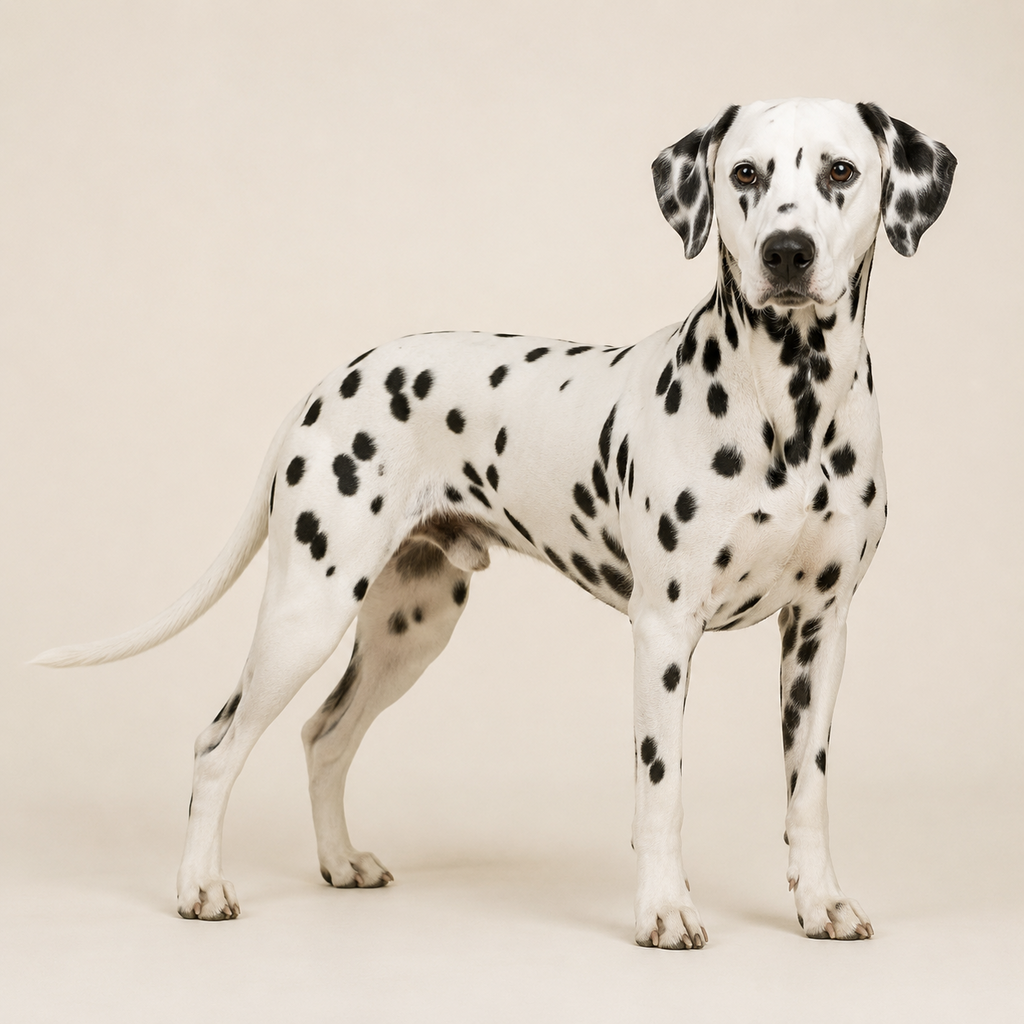
Non-Sporting Group · Croatia and Great Britain · Lives 11-13 yrs
Choose a Dalmatian if you want a striking endurance athlete bred to run for miles, with distinctive deafness and urinary-stone management needs and can provide about 120 minutes of daily activity plus breed-appropriate training.
Twelve core traits scored 1–10 from veterinary and kennel-club consensus.
A five-second gut check before you read the details.
“If Dalmatian were a person…”
A non-sporting breed developed for running beside coaches, guarding horses, and firehouse work, with exercise, management, and socialization requirements that should be evaluated before acquisition.
If your schedule cannot consistently support 120 minutes of daily activity, this breed is unlikely to thrive — pent-up energy becomes barking, chewing, and anxiety.
Intelligence is not obedience. Without early, consistent training this breed's default setting is the spotted coat sheds continuously, and inadequate exercise, poor socialization, deafness, or improper purine management can turn ownership into a difficult medical and behavioral project — plan for real time in the first year.
Low-maintenance still means maintenance — nails, ears, and teeth need routine care even when the coat is easy.
Insist on health-tested parents and budget for the unexpected — hereditary deafness and similar issues can mean four-figure vet bills. Pet insurance is worth pricing before you commit.
How well the Dalmatian fits different households and living situations, scored 0–100.
A quick three-way read on fit — where this breed shines, where it can work, and where it usually struggles.
What owning a Dalmatian really costs each month. Recurring essentials plus a recommended set-aside toward the big, unexpected vet bill — estimates in USD.
Budget around $448 a month before you fall in love with a puppy. Underestimating ongoing cost — especially emergency vet care — is a leading reason dogs are surrendered.
Estimated hands-on hours per week — roughly 35.2 hours of active involvement, on top of simply living together.
That is about 35.2 hours every week, week after week, for the dog's whole life. If your calendar can't find it now, it won't magically appear later.
The Dalmatian is a striking endurance athlete bred to run for miles, with distinctive deafness and urinary-stone management needs. Developed for running beside coaches, guarding horses, and firehouse work, the breed carries those working instincts into modern home life. Daily exercise should average about 120 minutes, alongside training and mental stimulation. Use energetic reward-based work, endurance outlets, early neutrality, and visual or tactile cues when hearing is limited. Coat care ranges with coat and lifestyle, while prospective owners should request documented health testing for hereditary deafness, urate urolithiasis, hip dysplasia. The spotted coat sheds continuously, and inadequate exercise, poor socialization, deafness, or improper purine management can turn ownership into a difficult medical and behavioral project. Individual dogs and breeding lines vary, but the best match is an active experienced household prepared for running, training, and urinary-health management.
By evening, after roughly 120 minutes of real activity, the Dalmatian finally downshifts — leaning into your side, content, and already dreaming about tomorrow.
Tick these off honestly before bringing a Dalmatian home. Every unchecked box is a reason to wait.