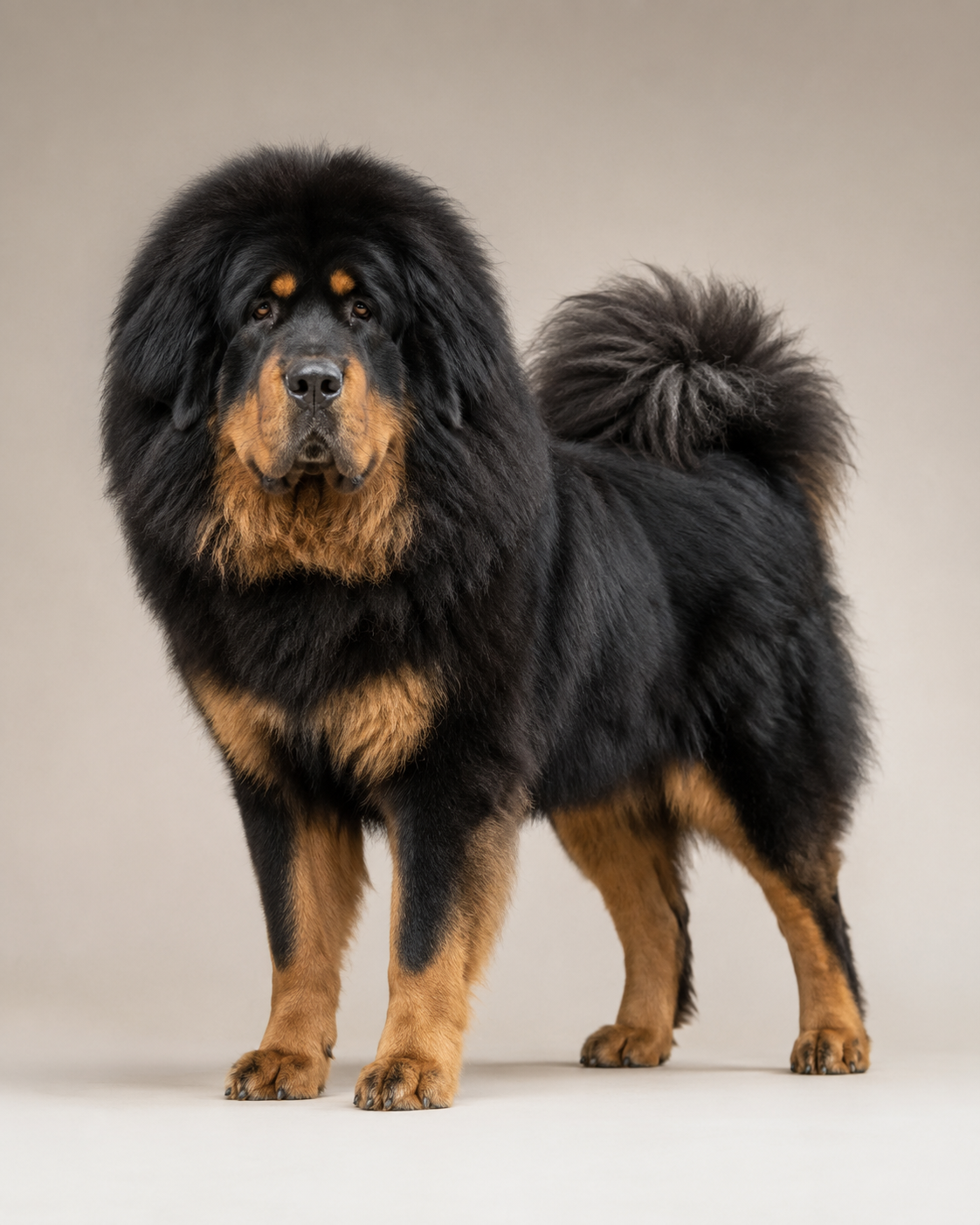
Working Group · Tibet/China · Lives 10-12 yrs
The Tibetan Mastiff is a extra large, moderate-energy dog with moderate grooming needs, heavy shedding, and a distinct mix of trainability, sociability, and independence. It can be an excellent match when its exercise, training, social, and household needs line up with the owner's real routine.
Twelve core traits scored 1–10 from kennel-club and veterinary consensus.
A five-second gut check before you read the details.
Plan on about 50 minutes of purposeful activity on most days, adjusted for age, health, weather, and the individual dog. Add training, scent work, play, or problem solving rather than relying on physical exercise alone.
Use reward-based training, short successful repetitions, clear household rules, and early socialization. Match training intensity to the breed’s independence, sensitivity, arousal level, and working heritage.
Expect moderate grooming demand and heavy shedding. Coat type, season, health, and individual variation affect actual maintenance.
Use health-tested breeding stock when buying from a breeder, establish veterinary care early, maintain healthy body condition, and discuss breed-relevant screening with a veterinarian.
Planning estimate only; geography, insurance, emergencies, grooming, training, food, and individual health can materially change actual costs.
A day with a Tibetan Mastiff is happy to ease into the morning with a gentle walk and some quiet company. It handles reasonable alone-time better than many breeds, though company is always preferred. Afternoons suit short, positive training and enrichment — mental work tires this breed as much as a walk. By evening it melts into full companion mode, leaning in and content simply to be near its people.
After roughly 50 minutes of real activity across the day, the Tibetan Mastiff finally downshifts, content and ready to do it all again tomorrow.