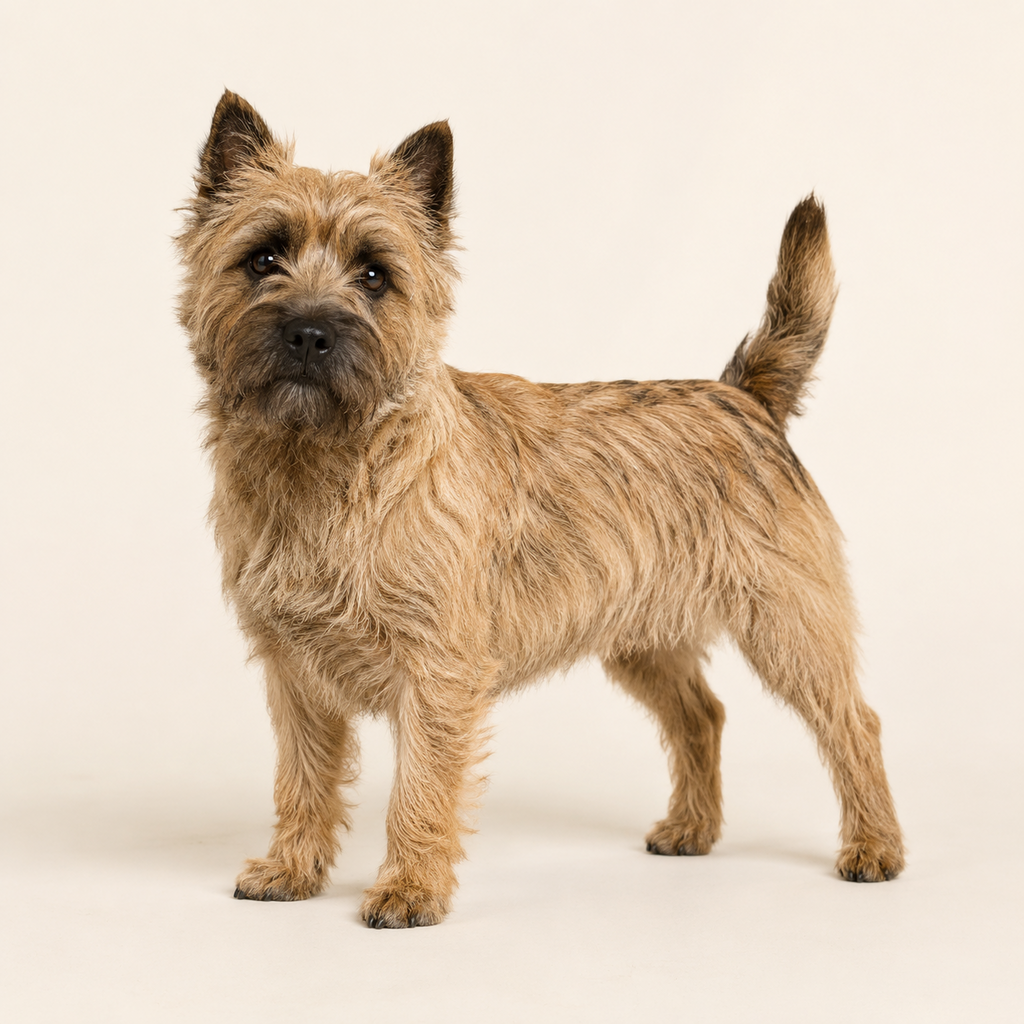
Brussels Griffon full body portrait
Breed Profile

Brussels Griffon

Toy Group · Belgium · Lives 12-15 yrs

Choose a Brussels Griffon if you want a tiny, expressive, intensely attached companion with terrier wit and notable sensitivity and can provide about 40 minutes of daily activity plus breed-appropriate training.

Toy HeritageDaily Exercise RequiredHealth-Tested Breeder PriorityBreed-Specific Training
Family
Trainability
Affection
Energy
Apartment
Beginner
SizeSmall
Height7 – 10 in
Weight8–10 lbs
Lifespan12-15 yrs
Exercise40 min/day
OriginBelgium
Evidence-based · AKC · FCI · Merck Vet Manual Research confidence 8.8/10
The Bottom Line

Choose a Brussels Griffon if you want a tiny, expressive, intensely attached companion with terrier wit and notable sensitivity and can provide about 40 minutes of daily activity plus breed-appropriate training.

6.5/ 10
Deeply affectionateAdapts to apartmentsSheds heavily
At a Glance

Breed Snapshot

Twelve core traits scored 1–10 from veterinary and kennel-club consensus.

Strengths
Energy6/10
Trainability7/10
Affection10/10
Exercise Need5/10
Kid-Friendly4/10
Beginner-Friendly6/10
Things to Know
Apartment Living9/10
Stranger-Friendly5/10
Shedding8/10
Drooling2/10
Grooming Effort6/10
Health Risk4/10
Compatibility

Is This the Right Dog for You?

A five-second gut check before you read the details.

Excellent Match If You…

  • You can provide about 40 minutes of daily activity
  • You value a tiny, expressive, intensely attached companion with terrier wit and notable sensitivity
  • You will use humane, consistent training
  • You will verify parent-club health testing

Probably Not Ideal If You…

  • Fragile size, prominent eyes, heat sensitivity, house-training challenges, and difficulty tolerating long separation limit the households that fit.
  • You cannot budget for routine and emergency veterinary care
  • You expect breed tendencies to be guarantees rather than probabilities
Meet This Breed

Meet the Brussels Griffon

“If Brussels Griffon were a person…”

A toy breed developed for stable vermin control and close companionship, with exercise, management, and socialization requirements that should be evaluated before acquisition.

Exercise & Energy

Exercise & Energy

6/10
Energy
Daily exercise
40 min
Structured activity, most days
Energy level
6/10
Mental work
7/10
Needs a job to stay balanced
Endurance
5/10
Compared with the average dog
  • Needs 40% less exercise
  • Needs more mental stimulation
Reality Check

Low needs are not no needs: skip the daily 40 minutes and even this breed gains weight and grows restless. Consistency matters more than intensity.

Trainability

Trainability & Behaviour

7/10
Trainable
Trainability
7/10
Learning speed
8/10
Housebreaking
5/10
Higher = harder

Works best with

  • reward-based training
  • short structured sessions
  • early socialization
  • management matched to breed instincts

Common challenges

  • Fragile size, prominent eyes, heat sensitivity, house-training challenges, and difficulty tolerating long separation limit the households that fit.
  • Under-stimulation can amplify breed-typical behavior
Compared with the average dog
  • About average trainability
Reality Check

Intelligence is not obedience. Without early, consistent training this breed's default setting is fragile size, prominent eyes, heat sensitivity, house-training challenges, and difficulty tolerating long separation limit the households that fit — plan for real time in the first year.

Grooming

Grooming & Shedding

6/10
Coat effort
Shedding
8/10
Drooling
2/10
Coat effort
6/10
Brushing
2-3 times weekly
Professional grooming
As needed
Bathing
Every 4-8 weeks or when dirty
Compared with the average dog
  • Sheds significantly more
  • More grooming than average
Reality Check

Expect 2-3 times weekly and hair on everything — clothes, sofa, car. If shedding is a dealbreaker, this is the wrong breed.

Health

Health & Longevity

6/10
Health
Health rating
6/10
Life expectancy
12-15 years
Routine vet / yr
$504

Screen breeders for

  • patella evaluation
  • ophthalmologist evaluation
  • cardiac evaluation

Watch for

  • patellar luxation
  • eye injury and disease
  • cardiac disease
  • syringomyelia
  • brachycephalic airway problems
Compared with the average dog
  • Lives ~2 yr longer than average
  • Costs less per year than average
Reality Check

Insist on health-tested parents and budget for the unexpected — patellar luxation and similar issues can mean four-figure vet bills. Pet insurance is worth pricing before you commit.

Compatibility

Household Compatibility

How well the Brussels Griffon fits different households and living situations, scored 0–100.

Young children
40/100
Teenagers
80/100
Singles
70/100
Seniors
70/100
Apartment living
90/100
Other dogs
50/100
Cats
60/100
Active owners
50/100
Lifestyle Match

Lifestyle Match

A quick three-way read on fit — where this breed shines, where it can work, and where it usually struggles.

Perfect for

An ideal match

  • You can provide about 40 minutes of daily activity
  • You value a tiny, expressive, intensely attached companion with terrier wit and notable sensitivity
  • You will use humane, consistent training
Good fit

Workable with effort

  • Committed singles
  • Active couples
  • Motivated first-time owners
Poor fit

Think twice

  • Fragile size, prominent eyes, heat sensitivity, house-training challenges, and difficulty tolerating long separation limit the households that fit.
  • You cannot budget for routine and emergency veterinary care
  • You expect breed tendencies to be guarantees rather than probabilities
Cost of Ownership

Monthly Ownership Dashboard

What owning a Brussels Griffon really costs each month. Recurring essentials plus a recommended set-aside toward the big, unexpected vet bill — estimates in USD.

Food
$42/mo
Insurance
$58/mo
Routine vet
$33/mo
Grooming
$29/mo
Training
$67/mo
First-year, amortised
Emergency savings
$181/mo
Toward a $6,500 fund
Total monthly estimate
$409/mo
≈ $4,913 per year
Compared with the average dog
  • Costs less per year than average
Reality Check

Budget around $409 a month before you fall in love with a puppy. Underestimating ongoing cost — especially emergency vet care — is a leading reason dogs are surrendered.

Time Commitment

Weekly Time Commitment

Estimated hands-on hours per week — roughly 26.2 hours of active involvement, on top of simply living together.

Exercise4.7 h/wk
Training3.8 h/wk
Grooming2.2 h/wk
Social interaction11.0 h/wk
Mental stimulation4.5 h/wk
Reality Check

That is about 26.2 hours every week, week after week, for the dog's whole life. If your calendar can't find it now, it won't magically appear later.

A Day in the Life

A Day with a Brussels Griffon

The Brussels Griffon is a tiny, expressive, intensely attached companion with terrier wit and notable sensitivity. Developed for stable vermin control and close companionship, the breed carries those working instincts into modern home life. Daily exercise should average about 40 minutes, alongside training and mental stimulation. Keep sessions gentle and entertaining; prioritize toilet routines, handling, and gradual alone-time training. Coat care ranges with coat and lifestyle, while prospective owners should request documented health testing for patellar luxation, eye injury and disease, cardiac disease. Fragile size, prominent eyes, heat sensitivity, house-training challenges, and difficulty tolerating long separation limit the households that fit. Individual dogs and breeding lines vary, but the best match is a home-centered adult household wanting a highly interactive toy companion.

By evening, after roughly 40 minutes of real activity, the Brussels Griffon finally downshifts — leaning into your side, content, and already dreaming about tomorrow.

Readiness

Before You Commit: Checklist

Tick these off honestly before bringing a Brussels Griffon home. Every unchecked box is a reason to wait.

  • Space for a small dog
  • ~40 minutes of daily exercise, rain or shine
  • A budget of roughly $409/month for its whole life
  • Time for 2-3 times weekly grooming
  • Commitment to early training and socialisation
  • A routine that avoids leaving it alone more than 3 hours
  • Readiness for a 12-15-year commitment
  • A relationship with a vet and a plan for emergencies
FAQ

Frequently Asked Questions

Is the Brussels Griffon good with children?
With care — the Brussels Griffon scores 4/10 for child-friendliness. Supervision and early socialisation are essential, especially with young children.
How much exercise does a Brussels Griffon need?
Plan on about 40 minutes of purposeful activity every day, kept consistent rather than intense.
Does the Brussels Griffon shed a lot?
Yes, heavily — shedding rates 8/10, and it does best with 2-3 times weekly.
Is the Brussels Griffon good for first-time owners?
It can work with commitment. First-time-owner suitability scores 6/10.
How long do Brussels Griffons live, and what health issues are common?
Typically 12-15 years. Be aware of patellar luxation and eye injury and disease.
Can a Brussels Griffon live in an apartment?
Yes, if exercised well — apartment suitability scores 90/100.